
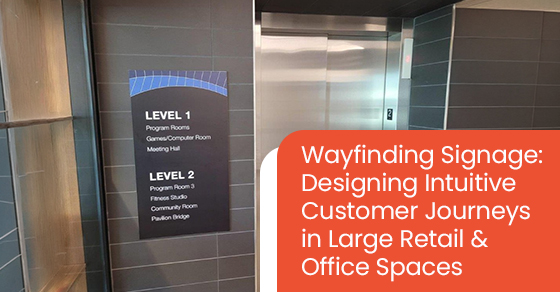
Walking into a large retail store, office complex, or commercial building without clear navigation can quickly become frustrating. Visitors may struggle to locate departments, meeting rooms, elevators, exits, or amenities, especially when directional information is limited or inconsistent.
Wayfinding signage helps create more intuitive customer journeys by guiding visitors through commercial environments with clear, organized navigation systems. From directional signs and directories to accessibility signage and branded navigation elements, a well-planned wayfinding strategy can improve traffic flow, reduce confusion, and create a more professional experience throughout the space.
Businesses that prioritize intuitive navigation often create environments that feel easier to use, more welcoming, and better organized for both visitors and staff.
How Wayfinding Signage Improves Customer Journeys
Effective wayfinding signage helps visitors move through commercial spaces more confidently while improving navigation, reducing confusion, and supporting smoother traffic flow. Clear directional signs can also strengthen customer experience by making retail stores, office buildings, and large facilities feel more organized and easier to navigate.
Reduces Visitor Confusion in Large Spaces
Large retail environments and office buildings can be difficult to navigate for visitors unfamiliar with the layout. Long corridors, multiple entrances, elevators, departments, and intersecting pathways often create uncertainty, especially for first-time visitors.
Wayfinding signage helps people quickly understand where they are and where they need to go. Clear directional signs placed at major decision points can reduce hesitation and help visitors move through the space more efficiently.
Common navigation challenges in commercial spaces include:
- Difficulty locating entrances, elevators, or reception areas
- Confusion between departments or office suites
- Unclear pathways through large retail environments
- Limited visibility of directories or directional signs
- Congestion in high-traffic areas during busy periods
In retail settings, customers may become frustrated if they cannot quickly find product departments, checkout areas, or customer service counters. In office environments, unclear navigation can lead to missed appointments, delays, or increased reliance on staff for directions.
Creates a More Positive Customer Experience
Visitors tend to feel more comfortable and confident when navigation feels intuitive. Clear wayfinding signage reduces uncertainty and allows people to focus on their purpose for visiting the space rather than worrying about where to go next.
A smoother customer journey can improve the overall perception of the business environment. Visitors who can easily locate departments, offices, meeting rooms, restrooms, or amenities are more likely to view the space as organized and professionally managed.
Wayfinding signage can enhance the customer experience by reducing reliance on staff for directions, helping visitors reach destinations more quickly, and improving confidence among first-time visitors. Consistent navigation systems can also create a more polished and cohesive appearance while supporting a smoother visitor experience during busy periods.
Improves Traffic Flow Throughout the Building
Directional signs play an important role in guiding movement throughout busy commercial environments. Strategic signage placement can help direct visitors through entrances, corridors, elevators, stairwells, and exits while reducing congestion in high-traffic areas.
Retail stores often rely on directional signage to organize foot traffic through departments, promotional areas, and checkout spaces. Office buildings may use wayfinding systems to separate visitor traffic from employee-only areas or to improve navigation across multiple floors.
High-traffic signage locations may include main entrances and lobbies, elevator banks and stairwells, hallway intersections, parking garage access points, and reception or directory areas. Larger commercial environments may also require directional signage near food courts, amenities, or event spaces to help visitors move through the building more efficiently.
Reinforces Branding and Professionalism
Wayfinding signage does more than provide directions. It also contributes to how visitors perceive the overall professionalism of the business environment.
Consistent typography, colours, materials, and visual styling can help directional signs feel integrated with the company’s branding rather than appearing disconnected from the surrounding space. A cohesive signage system often creates a more organized and polished atmosphere throughout retail and office environments.
Brand-focused signage systems may include:
- Consistent fonts and icon styles
- Coordinated colours that align with brand standards
- Matching materials and finishes across signage types
- Unified terminology throughout the building
- Consistent visual hierarchy across multiple floors or departments
Businesses that maintain visual consistency throughout their wayfinding signage often create stronger impressions of organization, professionalism, and attention to detail.
Supports Accessibility and Inclusive Navigation
Wayfinding signage should support navigation for as many visitors as possible. Accessible signage systems help create more inclusive environments by improving readability, visibility, and usability throughout the building.
Readable fonts, strong colour contrast, proper mounting heights, and clear directional symbols can make navigation easier for visitors with different visual, mobility, or cognitive needs. Some commercial spaces may also incorporate tactile and Braille signage where appropriate.
Accessibility considerations for wayfinding signage may include:
- High-contrast colour combinations
- Large, readable typography
- Braille and tactile signage options
- Universal symbols and icons
- Proper sign placement and viewing angles
- Consistent directional cues throughout the facility
Supporting inclusive navigation can improve usability for all visitors, not just those with specific accessibility requirements.
Encourages Longer Engagement in Retail Environments
In retail spaces, intuitive navigation can influence how customers interact with the environment. Clear directional signs may encourage shoppers to explore additional departments, promotional displays, or featured areas they might otherwise overlook. Poor navigation, on the other hand, can create frustration that shortens visits and limits customer engagement.
Strategic wayfinding signage can help customers discover additional products and departments while supporting smoother movement throughout the store. Clear directional signs may also reduce confusion during busy shopping periods, highlight seasonal or promotional areas, and improve access to amenities and customer service locations.
6 Essential Elements of Effective Wayfinding Signage
Successful wayfinding signage systems rely on more than simple directional arrows. Clear messaging, consistent design, strategic placement, and accessibility all contribute to navigation systems that feel intuitive and easy to follow.
1. Use Clear and Concise Messaging
Visitors often make navigation decisions quickly while walking through busy commercial spaces. Signage that uses short, direct language tends to be easier to process at a glance.
Effective wayfinding messaging usually avoids unnecessary wording, technical language, or cluttered layouts that make signs harder to scan.
Best practices for sign messaging include:
- Keeping wording short and easy to understand
- Using consistent terminology throughout the building
- Avoiding information overload
- Incorporating universally recognized symbols where appropriate
- Prioritizing the most important navigation details first
A simple directional sign is often more effective than one overloaded with excessive information.
2. Maintain Consistent Design Across All Signage
Consistency helps visitors recognize navigation cues more easily throughout a building. When directional signs share the same fonts, colours, icons, and visual hierarchy, visitors can move through the environment with greater confidence.
Consistent signage systems may include standardized typography and colour palettes, matching directional icons and symbols, and consistent terminology across departments and floors. Uniform materials, finishes, and coordinated branding elements throughout the facility can also help create a more cohesive navigation experience.
Visual consistency also helps reinforce brand identity while making navigation feel more organized and predictable.
3. Prioritize Readability and Visibility
Even well-designed signage can become ineffective if visitors cannot easily see or read it. Font size, colour contrast, placement, lighting, and viewing distance all affect readability.
Signs positioned too high, too low, poorly lit, or blocked by architectural features may fail to provide guidance when visitors need it most.
Readability best practices include:
- Choosing clean, legible font styles
- Using a strong contrast between text and background colours
- Positioning signs within clear sightlines
- Providing adequate lighting near signage
- Avoiding visual clutter around sign placement areas
Readability should remain a priority across all directional signs, directories, and identification signage.
4. Place Directional Signs at Key Decision Points
Visitors are most likely to need guidance when approaching intersections, entrances, elevators, or major transitions within the building. Placing directional signs before those decision points helps people navigate more confidently.
Important signage locations may include building entrances, elevator lobbies, hallway intersections, parking access points, reception areas, and major department transitions. Placing directional signs in these areas can help visitors make navigation decisions more quickly and confidently as they move through the building.
5. Design for Accessibility and Inclusive Navigation
Inclusive signage design helps ensure commercial spaces remain accessible and easy to navigate for a broader range of visitors.
Inclusive signage strategies often include Braille and tactile elements, appropriate mounting heights, universal symbols, readable text, and strong colour contrast. Consistent wayfinding cues throughout a facility can further improve accessibility, helping visitors navigate the space more easily and confidently.
6. Create a Logical Information Hierarchy
Visitors should be able to scan signage quickly and identify the most important information without confusion. Organizing content through visual hierarchy helps people process navigation details more efficiently.
Directories, identification signs, and directional signs each serve different purposes within a wayfinding system. Differentiating those sign types through size, spacing, colour, and layout can improve readability throughout the building.
A logical information hierarchy may include:
| Sign Type | Primary Function |
|---|---|
| Directory Signs | Provide overall building orientation |
| Directional Signs | Guide movement toward destinations |
| Identification Signs | Label rooms, offices, or departments |
| Regulatory Signs | Communicate rules or restrictions |
Organized signage systems can help reduce information overload while making navigation feel more intuitive.
Common Types of Directional Signs Used in Commercial Spaces
Commercial wayfinding systems often combine multiple signage types to support navigation across both interior and exterior environments.
Directory Signs
Directory signs help visitors orient themselves at major access points such as entrances, lobbies, and reception areas. These signs typically display maps, floor layouts, tenant listings, or department locations to provide an overview of the space.
Overhead Directional Signs
Overhead directional signs are commonly used in larger facilities where visibility from a distance is important. Retail centres, office complexes, airports, and healthcare environments often use suspended signage to guide foot traffic through corridors and shared spaces.
Wall-Mounted Directional Signs
Wall-mounted directional signs support navigation throughout hallways, departments, and office areas. These signs are frequently positioned at intersections or outside rooms where visitors need confirmation that they are moving in the right direction.
ADA and Accessibility Signs
Accessibility signage supports inclusive navigation in commercial environments. Depending on the facility requirements, these signs may include tactile lettering, Braille, accessible room identification, and directional information designed to support visitors with different accessibility needs.
Exterior Wayfinding Signs
Exterior wayfinding signage helps guide visitors before they enter the building. Parking lot signs, entrance markers, traffic flow signage, and directional markers can improve navigation throughout larger commercial properties and multi-building facilities.
How to Plan an Effective Wayfinding Signage System for Your Business
Wayfinding signage works best when it is planned strategically rather than added as an afterthought. Understanding how visitors move through the space can help businesses create navigation systems that feel intuitive and easy to follow.
Evaluate How Visitors Move Through Your Space
Before designing signage, businesses should understand how customers, visitors, employees, and vendors move throughout the facility.
Observing movement patterns can help businesses identify high-traffic areas, common confusion points, and frequently used entrances and exits throughout the facility. It can also reveal bottlenecks, congestion areas, and navigation challenges that may affect first-time visitors.
Identify Key Decision Points for Directional Signs
Directional signs tend to be most effective when placed before visitors need to make navigation decisions.
Important decision points often include:
- Elevator lobbies
- Corridor intersections
- Entrances and exits
- Parking access areas
- Reception spaces
- Major department transitions
Positioning signage early enough allows visitors time to process directions before reaching the next navigation choice.
Create a Consistent Signage Hierarchy
A clear signage hierarchy helps visitors quickly distinguish between directories, directional signs, identification signage, and informational displays.
Consistent hierarchy systems may include standardized terminology and icons, consistent font sizing and spacing, and coordinated colour coding throughout the facility. Predictable sign placement and clear visual differentiation between sign categories can also help visitors process navigation information more efficiently.
Work With Experienced Wayfinding Signage Professionals
Large commercial environments often require customized wayfinding strategies that balance functionality, branding, durability, and scalability.
Experienced signage professionals can help businesses develop cohesive navigation systems, identify effective sign placement locations, and coordinate branding with functionality throughout the space. They can also recommend durable materials for both interior and exterior environments while planning signage systems that can adapt to future expansion or layout changes.
Improve Customer Journeys With Professional Wayfinding Signage
Effective wayfinding signage helps businesses create smoother, more intuitive customer journeys throughout large retail stores, office buildings, and commercial properties. Clear directional signs, directories, and accessibility-focused navigation systems can reduce confusion, improve traffic flow, and create more comfortable visitor experiences.
Businesses that invest in professionally designed wayfinding signage often create environments that feel more organized, easier to navigate, and more supportive of both customer experience and daily operations.
New Style Signs provides professional wayfinding signage solutions tailored to commercial spaces of all sizes. Reach out today at 866-591-6938 or contact us here.
Frequently Asked Questions About Wayfinding Signage
What is wayfinding signage?
Wayfinding signage refers to signage systems designed to help people navigate spaces more efficiently. These systems may include directional signs, directories, identification signs, accessibility signage, and informational displays.
Where is wayfinding signage commonly used?
Wayfinding signage is commonly used in retail stores, office buildings, healthcare facilities, campuses, hotels, commercial properties, transportation hubs, and other large public environments.
What makes directional signs effective?
Effective directional signs use clear messaging, readable typography, strong contrast, strategic placement, and consistent visual design. Simplicity and visibility are often key factors in successful navigation systems.
How can wayfinding signage improve customer experience?
Wayfinding signage can reduce confusion, improve navigation, support accessibility, and help visitors move through commercial spaces more confidently and efficiently.
Why should businesses invest in professional wayfinding signage?
Professionally designed wayfinding signage can improve customer experience, operational efficiency, branding consistency, and long-term usability throughout complex commercial environments.