
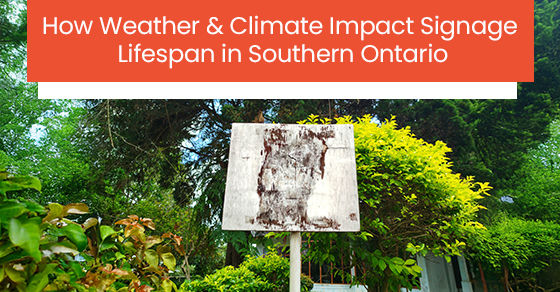
In Southern Ontario, a sign has to withstand humid summers, driving rain, slush, road salt, wind, and long freeze-thaw cycles that can wear materials down faster than many business owners expect. Whether a sign stands outside a retail plaza, school, church, office building, or institutional property, year-round exposure affects its appearance, functionality, and longevity.
In this blog, we’ll look at how local weather patterns affect outdoor signs, the types of weather damage worth watching for, and the material, design, and maintenance choices that can help protect your investment over time from long-term climate impact.
What Weather Damage Risks Affect Outdoor Signs in Southern Ontario?
Outdoor signs in Southern Ontario are exposed to demanding seasonal conditions that can affect both performance and appearance. Weather damage risks include reduced visibility, weakened materials, loose components, and faster deterioration over time. For business owners and property managers, understanding these risks helps protect their signage investment and plan maintenance before minor wear becomes costly damage.
The sections below break down how each condition can affect outdoor signs over time.
UV exposure and summer heat can fade and weaken outdoor signs
Extended sun exposure can take a visible toll on sign materials. Printed graphics may begin to fade, vinyl can dry out and lift, painted surfaces can become chalky, and some plastics can become brittle over time. In the hottest weeks of summer, heat can also affect certain finishes and printed surfaces, especially on signs that face south or are exposed to full sun throughout the day.
This type of wear tends to occur gradually, making it easy to miss at first. A sign may still be readable even as the surface begins to break down. Over time, though, fading and material fatigue can make the sign look dated, uneven, or poorly maintained.
Rain, moisture, and humidity can lead to corrosion and weather damage
Moisture does not need a major storm to cause trouble. Repeated exposure to rain, damp air, and humidity can affect sign panels, edges, mounting points, fasteners, and printed surfaces over time. If water gets into seams or around attachment points, it can sit where the problem is not obvious until corrosion or material failure is already underway.
Common moisture-related issues include:
- Rust on brackets, fasteners, or frames
- Swelling or edge deterioration on vulnerable materials
- Bubbling graphics or lifting printed surfaces
- Water intrusion around seams, edges, and mounting points
Snow, ice, and freeze-thaw cycles put stress on outdoor signs
Southern Ontario winters create a different kind of pressure, and that seasonal climate impact is hard on sign materials. Snow load and ice buildup can add weight to sign structures, while repeated freezing and thawing can widen small cracks, loosen hardware, and stress seams that already have minor weaknesses. When moisture gets trapped in tiny openings, it expands as it freezes and can turn a manageable issue into a larger repair.
A small separation at a panel edge in late fall is a good example. It may seem minor before winter sets in. After weeks of snow, thaw, and refreezing, that same opening can let in more water, weaken adhesion, and leave the sign with visible cracking or partial face damage by spring.
Wind and storms can loosen hardware and strain outdoor signs
High winds do not have to cause dramatic damage to shorten the life of a sign. In many cases, the effect is more gradual. Posts, brackets, anchors, panels, and illuminated components can all experience movement, vibration, and shifting over time. Severe weather speeds that up, but even regular wind exposure can contribute to wear at joints and connection points.
After strong weather, businesses should inspect for:
- Hardware that no longer sits flush or appears slightly displaced
- Stress marks around posts, brackets, or mounting points
- Sign faces that look uneven, warped, or pulled out of position
- Flickering lights, exposed wiring, or shifted trim on illuminated signs
Temperature swings can shorten the lifespan of outdoor signs
Southern Ontario’s changing temperatures put materials under constant stress. Expansion in warmer conditions and contraction in colder ones can gradually affect sign performance, especially when multiple materials are joined together. Adhesives, seams, and attachment points can become vulnerable when components move at different rates.
This is one reason mixed-material signs need careful fabrication. Acrylic faces, metal frames, vinyl graphics, and illuminated elements do not all respond to temperature changes the same way. Over time, that movement can show up as separation at joints, stress around mounting points, or premature wear in areas that looked solid when the sign was first installed.
How Does Material Choice Affect Outdoor Signs in Harsh Weather?
Not all outdoor signs respond the same way to weather damage. Material choice has a direct effect on how well a sign handles moisture, UV exposure, wind, and temperature changes tied to local climate impact. The right combination of weather-resistant materials, protective coatings, UV protection, and proper fabrication can make a substantial difference in long-term performance.
| Material | Common Weather Risk | Durability Notes |
|---|---|---|
| Aluminum | Surface wear, denting, corrosion at unprotected points | Strong option for many exterior applications when properly finished |
| Acrylic | Cracking, discoloration, brittleness over time | Performs well when fabricated and installed correctly, but quality matters |
| PVC | Warping, fading, edge wear | Useful for some exterior uses, though lifespan depends on exposure level |
| Vinyl Graphics | Peeling, fading, adhesive failure | Better results come from quality films, laminates, and careful application |
| Wood | Moisture absorption, swelling, rot, finish breakdown | Requires more upkeep and protection in harsh weather |
| Illuminated Components | Water intrusion, wiring stress, seal failure | Need strong fabrication, sealing, and inspection for long-term reliability |
Choosing the right material helps outdoor signs withstand Southern Ontario’s changing conditions with fewer repairs and better visibility over time. For the best results, businesses should match sign materials to the location, exposure level, and long-term maintenance needs.
How Can You Help Outdoor Signs Last Longer in Southern Ontario?
Weather damage can often be reduced with a proactive signage plan. Beyond knowing what can go wrong, businesses can extend the life by making practical decisions around design, placement, installation, and maintenance before small issues become expensive repairs.
Plan the sign around its exact location
A sign’s placement should guide decisions about size, materials, mounting, and visibility. Outdoor signs exposed to full sun, open wind, road salt, or heavy runoff may need different design choices to reduce weather damage and account for local climate impact.
Prioritize protective finishes and fabrication quality
Durability depends on more than the base material. Protective coatings, sealed edges, quality laminates, and careful fabrication can help outdoor signs resist premature wear while maintaining a clean, professional appearance through changing Southern Ontario conditions.
Use installation methods suited to exterior exposure
Proper installation helps outdoor signs stay secure and functional over time. Mounting methods, hardware, foundations, and sealing details should be chosen based on location, exposure, and the climate impact created by weather, vibration, and seasonal movement.
Build seasonal cleaning and inspections into your maintenance routine
Regular maintenance helps businesses catch small problems before they affect visibility or structure. Cleaning away dirt, salt, debris, and buildup also makes it easier to spot early weather damage, surface wear, loose hardware, or moisture-related concerns.
Fix early signs of wear before performance is affected
Small issues are usually easier and less expensive to repair when handled early. Peeling graphics, loose fasteners, minor cracks, rust spots, or failing seals should be addressed before weather damage spreads or compromises the sign’s durability.
Partner with a local signage company for long-term support
A local signage company can recommend materials, installation methods, and maintenance steps suited to Southern Ontario’s climate impact. Their guidance helps businesses protect outdoor signs and keep them looking professional, visible, and reliable year after year.
Protecting Outdoor Signs from Southern Ontario Weather
Southern Ontario weather can wear down outdoor signs faster when material choice, installation quality, and upkeep are treated as afterthoughts. Sun exposure, moisture, wind, and freeze-thaw cycles all contribute to weather damage over time, and climate impact becomes more serious when early warning signs are missed. Businesses that plan for those conditions are in a better position to protect appearance, reduce repair costs, and get more life from their signage investment.
To explore durable outdoor signs built for long-term performance, reach out to New Style Signs today at 866-591-6938 or contact us here.
FAQ: Outdoor Signs, Weather Damage, and Climate Impact
What types of weather damage are most common in outdoor signs?
Common issues include fading, rust, cracking, peeling graphics, water intrusion, and loose hardware. Some problems stay cosmetic at first, but they can spread and affect performance if they are left unaddressed.
How often should outdoor signs be inspected for weather damage?
Seasonal inspections are a smart approach for most properties, with extra checks after major storms or severe winter weather. Regular reviews make it easier to catch small issues before they turn into larger repairs.
Can maintenance really extend the lifespan of outdoor signs?
Yes. Cleaning, recoating, resealing, and early repairs can slow the spread of weather damage and help signs stay presentable for longer. Proactive upkeep usually costs less than waiting until the damage becomes structural or widespread.